
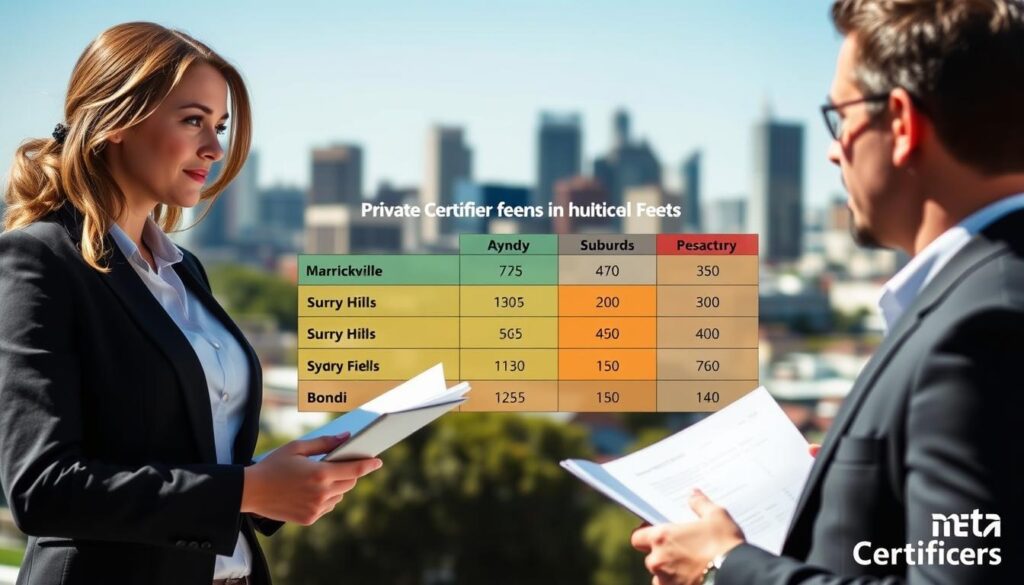
Compare private certifier fees in Sydney suburbs
Meta Certifiers Pty Ltd helps you cut through confusion when planning a building project.
Have you ever wondered why the cost for a construction certificate can vary so much across councils?
I guide homeowners and developers to understand certifier quotes and spot unexpected charges early.
Whether you are planning a granny flat or a larger residential development, proper planning keeps your budget on track.
Contact me at [email protected] or call 1300740378 for clear advice from 1/25 Padstow Pde Padstow NSW 2211.
Key Takeaways
- Know the rules: a construction certificate is mandatory before work starts.
- Budget early: factor certifier costs into your project estimate.
- Compare quotes: look at what’s included to avoid surprises.
- Plan for council steps: approvals affect timing and cost.
- Get expert help: I provide transparent guidance to protect your budget.
Why construction certificate costs matter
Getting the budget wrong for approval work can stall your development before it starts. A construction certificate is a fixed payment you must clear before any building work begins.
I advise clients to treat this cost as part of early cash flow planning. Underestimating can leave you short of funds and threaten the viability of a granny or home build.
Turnaround matters. I often see private certifier approvals in 10–15 business days. Council processes usually take 20 days or more.
Those timing gaps create holding costs, extra interest and unexpected delays that inflate total construction expenses. Identifying every fee component early prevents hidden charges from eroding your margin.
- Plan for consultant reports and council contributions.
- Factor approval timing into loan interest and contractor scheduling.
- Decide early whether a private certifier route suits your timeline and budget.
| Item | Typical timing | Impact on budget |
|---|---|---|
| Private certifier approval | 10–15 business days | Lower holding costs, faster work start |
| Council approval | 20+ business days | Higher interest, potential delays |
| Construction certificate | Paid before works start | Direct early-stage cashflow impact |
Compare private certifier fees in Sydney suburbs
Costs for building approvals can swing widely depending on who you appoint and the scope of work.
Typical price ranges for 2025
For residential projects I typically see prices from $1,500 to $5,000. Commercial developments often exceed $10,000.
Remember: a construction certificate for a granny flat must be obtained and a Principal Certifying Authority nominated before any work starts.
Getting itemised quotes
Request at least three quotes and insist on itemised lists. Some certifiers bundle inspections; others add them later.
- Ask for base price, inspection charges and amendment costs.
- Check how many site visits are included and the likely turnaround time.
- Factor local council timing—lower base prices can cost you delay-related expenses.
| Service | Typical range | What to check |
|---|---|---|
| Residential approval | $1,500–$5,000 | Inspections included, turnaround |
| Commercial development | $10,000+ | Scope, extra site visits, reporting |
| Local council option | Lower base price | Booking delays for mandatory inspections |
Understanding the components of your building approval budget
Breaking down the budget items early stops surprises and keeps your build on track. I recommend listing every expected charge and setting a contingency for the unknown.
Start with the must-pays: you must lodge a construction certificate through the NSW Planning Portal and pay a $46 Service NSW fee. The total approval cost also includes certifier charges, council contributions, the long service levy and consultant costs.
- Certifier review and inspections — confirms licences and insurance for your builder.
- Long service levy — calculated from construction value (0.25% for projects over $250,000).
- Consultant reports — geotech, structural or environmental work for complex sites.
| Item | Typical element | Why it matters |
|---|---|---|
| Service NSW | $46 | Mandatory when lodging a construction certificate |
| Levy & contributions | 0.25% over $250k | Drives final cost based on construction value |
| Site reports | Variable | Complex locations increase costs and timeline |
Every specific project has unique needs. I advise accurate construction value calculations and clear contingency buffers to manage the approval process and avoid costly modification charges.
Comparing private certifiers against local council services
Speed, rule interpretation and booking availability vary between council and private routes. I walk clients through those differences so you can pick the path that suits your timeline and budget.
Service speed and availability
Use private options and you can often book inspections within hours and get clarifications fast. Council bookings may require weeks, which can slow construction and add holding costs.
Regulatory compliance and leniency
There are two options to gain approval for a granny build: a Development Application through council or a Complying Development Certificate. I confirm that a private certifier will only issue a CDC when all legislative rules and building requirements are met.
Council pathways can sometimes approve parts of a project under DA rules rather than strict CDC limits. That can feel more flexible, but it may extend time and cost.
Mandatory inspection requirements
Mandatory inspections are essential. A certifier conducts key site inspections in person at staged points during construction to protect safety and compliance.
- Benefits: faster bookings, direct communication and fewer delays.
- Consider: council leniency under DA versus rigid CDC checks for swift approval.
| Aspect | Private route | Local council |
|---|---|---|
| Typical booking time | Within hours to days | Weeks |
| Regulatory stance | Strict CDC compliance | DA flexibility possible |
| Inspections | On-site staged checks | Scheduled, may be delayed |
How to calculate your project construction value
Start with floor area and a realistic rate per square metre to set your approval baseline. Multiply the proposed floor area by typical construction costs, which commonly range from $2,000 to $4,000 per square metre.
For example, a 200 m² duplex at $2,500/m² gives a construction value of $500,000. This figure becomes the basis for levies, the construction certificate price and other approval charges.
I always check that your certifier verifies the value against industry benchmarks. That stops under- or over‑stating the number and prevents unexpected levy adjustments later.
Project complexity affects where your costs fall. Simple renovations attract lower certifier ranges. Multi-storey or high-spec builds push you toward the higher end.
- Use council calculators or industry rates to validate your estimate.
- Keep accurate figures to compare quotes fairly and avoid late adjustments.
- Remember that inspections and approval timing link back to this construction value.
| Step | Example | Why it matters |
|---|---|---|
| Measure floor area | 200 m² | Base for calculation |
| Apply rate | $2,500/m² | Reflects standard construction cost |
| Resulting value | $500,000 | Used for levies, certificates and price checks |
For practical guidance on estimating approval costs and choosing a private certifier, see my detailed cost notes at cost of a private building certifier. Accurate construction value is the most important figure to get right at the start.
Factors influencing your total certification expenditure
Site factors and local contributions are often the largest unknowns in your approval budget.
Location can add levies. Metropolitan council charges such as section 7.11 or 7.12 contributions sometimes add $10,000–$30,000 to a project.
Project complexity raises assessment time and certifier costs. Heritage overlays, bushfire requirements or steep blocks need specialist reports and more inspections.
What typically drives higher costs
- Mandatory inspections and extra site visits.
- Hydraulic, geotechnical or structural reports.
- Higher construction value — the long service levy is 0.25% for projects over $250,000.
- Commercial developments often attract much larger certifier quotes than residential projects.
| Factor | Typical impact | Action |
|---|---|---|
| Council contributions | $10k–$30k extra | Check council plan early |
| Site complexity | Higher assessment time | Budget for reports |
| Inspections & reports | Variable costs | Confirm number of visits |
I recommend checking council contributions and site requirements early so your total cost estimate matches the real project scope.
Strategies to avoid common cost traps
A few simple steps early on can cut your approval outlay by a large margin. I focus on practical moves that stop small issues becoming expensive problems.
Lock designs before lodgement. Fix material choices, window positions and key details so you avoid reassessment charges of 25–50% of the original charge.
Bundle inspections where possible. Packaging mandatory inspections can save $500–$1,500 compared with per-visit rates throughout construction. That reduces repeated site attendance and lowers total costs.
- Engage structural and BASIX consultants at the same time to avoid duplicate visits.
- Keep documentation complete to prevent reassessment and extra council checks.
- Book an inspection quickly — a certifier can often fit you within hours to stop site downtime.
| Cost trap | Impact | How I fix it |
|---|---|---|
| Design changes after lodgement | Reassessment fees 25–50% | Lock decisions pre‑submission |
| Pay‑per‑visit inspections | Higher total inspection costs | Bundle mandatory inspections |
| Poor documentation | Delays, council rechecks | Coordinate reports and submit complete files |
Plan strategically and you can cut total outlay by 20–40% on many developments, including granny builds. For a deeper cost guide see my notes on the cost of a building certifier for a new.
Navigating the approval process for residential developments
A smooth approval outcome relies on detailed drawings and early checks against local planning controls.
Start with complete plans that meet state and local building requirements. Accurate drawings reduce reassessments and keep your project on schedule.
A construction certificate confirms your plans meet the Building Code of Australia and your development consent. Obtain this before any physical work begins to avoid compliance risks.
You can engage a private certifier to manage a Complying Development Certificate for a faster, streamlined approval. If the site or design fails complying development rules, you must lodge a Development Application with the local council.
I recommend working closely with your certifier to secure all required certificates early. This step prevents common pitfalls that delay construction and increase fees.
- Checklist: site plans, specifications, BASIX, structural reports.
- Confirm: which certificates are needed before starting work.
- Communicate: keep the council and your certifier updated on changes.
| Stage | What it confirms | Why it matters |
|---|---|---|
| Plan lodgement | Design matches building requirements | Reduces reassessment and delay |
| Construction certificate | Compliance with Building Code | Legal right to start construction |
| Development application | When complying development not possible | Handled by the local council |
Professional guidance for your building project
Engaging professional help early makes your path to a construction certificate far smoother. I guide clients to weigh up the choice to use council services or the private certifier council route.
Benefits of early contact include clear cost projections, fewer reassessments and faster bookings. I help you pick the right certifier for your specific project and timeline.
I can explain when to use council checks and when to use private options so your development meets rules without delay. If you choose to use private certifiers, you may bypass council complexities and speed construction.
- Early advice finalises budget and avoids last‑minute surprises.
- I review documentation to reduce reassessment and added charges.
- My team helps you decide the right certifier for a granny build or larger development.
| Service | Typical outcome | Why it helps |
|---|---|---|
| Initial review | Clear cost and timeline | Sets realistic budget |
| Certifier selection | Right fit for scope | Reduces delays and disputes |
| Ongoing support | Faster approvals | Protects project returns |
Contact Meta Certifiers Pty Ltd on 1300740378 for expert guidance on your construction certificate process. For a focused pricing note see our building certifier fees for a duplex.
Finalising your budget and moving forward
Final steps matter: lock your numbers before you sign off on plans.
Finalising your budget means accounting for every construction certificate charge, the $46 portal fee and any council contributions. Check consultant reports and mandatory inspection costs so your total development costs are clear.
Choosing the right approval process, such as a complying development pathway, can save time and reduce costs for a granny build. I recommend one last review of the budget and scope to ensure you can gain approval and start work with confidence.
If you want help to finalise figures or navigate the approval process, I can assist. See my approval guide or contact Meta Certifiers Pty Ltd for tailored support.
FAQ
What typical price ranges should I expect for certifier charges in 2025?
FAQ
What typical price ranges should I expect for certifier charges in 2025?
I usually see a broad range depending on project type. For a standard single‑dwelling construction certificate you can expect around
FAQ
What typical price ranges should I expect for certifier charges in 2025?
I usually see a broad range depending on project type. For a standard single‑dwelling construction certificate you can expect around $1,200–$3,500. Smaller works like alterations often fall under $600–$1,500, while large or commercial developments may attract $5,000–$20,000+ depending on scope and inspections required.
Why do construction certificate costs matter for my project?
These costs directly affect your upfront budget and cashflow. They cover assessment, documentation checks and the authority to start work. Underestimating them can delay building commencement or force scope cuts. I treat them as a fixed component when planning finance and timelines.
How do I get accurate, itemised quotes from certifiers?
I request written quotes that separate application fees, inspection fees, administration charges and any hourly rates for additional advice. Provide plans and a clear scope so the assessor can quote accurately. Compare at least three providers and check what inspections are included.
What makes up the building approval budget beyond the assessment fee?
The budget should include the construction certificate charge, number and type of mandatory inspections, engineer or specialist reports, plan amendments, and contingencies for rectification notices. I also allow for local council fees if council involvement is required.
Why might I choose a certifier over council, or vice versa?
I weigh speed, availability and specialisation. Private assessors often offer faster turnarounds and flexible inspection hours. Councils may be cheaper for simpler jobs and provide consistent local knowledge. The right option depends on project complexity and your timeline.
Are there differences in regulatory approach between a certifier and council?
Both must enforce the same building code, but private assessors can be more pragmatic in managing minor non‑conformances and coordinating specialists. Councils sometimes have stricter local policies or longer processing times. I verify their track record on similar projects before deciding.
What mandatory inspections should I budget for throughout construction?
Typical compulsory inspections include footing, slab, framing, waterproofing, and final handover. Specialist inspections (e.g. structural steel, fire systems) may be required for complex jobs. I confirm the exact schedule with the certifier up front to avoid surprise costs.
How do I calculate my project’s construction value for fees?
I total the contract sum for all building works, including materials, subcontractor costs and on‑site labour. Some assessors use a sliding scale fee tied to that value. If scope changes, update the value immediately so fees and levies reflect the revised project.
What site factors increase certification costs?
Steep sites, heritage overlays, flood or bushfire risk areas and constrained access add inspections and specialist reports, which raise costs. I also find that inner‑city or high‑demand locations often have higher hourly rates from assessors.
How can I avoid common cost traps during certification?
I recommend clear briefs, early engagement with the certifier, and getting required specialist reports up front. Lock in fees in writing, allow contingency for plan changes and ensure inspections are scheduled to avoid re‑inspection charges.
What differs between approval paths for complying development and full development applications?
Complying development is a fast‑track approval for simple, code‑compliant projects and usually costs less. Full development applications suit complex or non‑standard work and need more assessment, public notification and specialist input. I choose the path that best matches scope and risk.
How many hours should I expect certifiers to be available if I need quick advice?
Many firms offer business‑hours support and some provide extended site inspection windows for tight schedules. I ask potential assessors about typical response times and out‑of‑hours options before appointing them.
Do certifiers issue certificates I can rely on for finance and insurance?
Yes. Accredited assessors provide the necessary construction certificates and occupation certificates accepted by lenders and insurers. I check credentials and ask for sample certificates to confirm format and content.
How do specialist reports affect total certification expenditure?
Structural engineers, geotechnical reports, energy efficiency statements and fire safety consultants add to the fee stack. For complex projects I budget these costs early because they also influence assessment time and potential plan revisions.
Can I switch from council to a certifier mid‑project to speed things up?
Switching is possible but involves transferring documentation and may trigger duplicate fees or extra inspections. I assess the time savings against added costs and ensure both parties sign off on the handover.
What benefits do I get from hiring an experienced certifier for residential work?
Experienced assessors streamline approvals, identify compliance risks early and coordinate specialists efficiently. I find this reduces delays and often lowers total project risk and unexpected costs during construction.
How should I finalise my budget for certification before construction starts?
I obtain detailed written quotes, include at least a 10–15% contingency for certification and specialist reports, and factor in potential council levies. That gives a realistic approval cost line in your overall project budget.
,200–,500. Smaller works like alterations often fall under 0–
FAQ
What typical price ranges should I expect for certifier charges in 2025?
I usually see a broad range depending on project type. For a standard single‑dwelling construction certificate you can expect around $1,200–$3,500. Smaller works like alterations often fall under $600–$1,500, while large or commercial developments may attract $5,000–$20,000+ depending on scope and inspections required.
Why do construction certificate costs matter for my project?
These costs directly affect your upfront budget and cashflow. They cover assessment, documentation checks and the authority to start work. Underestimating them can delay building commencement or force scope cuts. I treat them as a fixed component when planning finance and timelines.
How do I get accurate, itemised quotes from certifiers?
I request written quotes that separate application fees, inspection fees, administration charges and any hourly rates for additional advice. Provide plans and a clear scope so the assessor can quote accurately. Compare at least three providers and check what inspections are included.
What makes up the building approval budget beyond the assessment fee?
The budget should include the construction certificate charge, number and type of mandatory inspections, engineer or specialist reports, plan amendments, and contingencies for rectification notices. I also allow for local council fees if council involvement is required.
Why might I choose a certifier over council, or vice versa?
I weigh speed, availability and specialisation. Private assessors often offer faster turnarounds and flexible inspection hours. Councils may be cheaper for simpler jobs and provide consistent local knowledge. The right option depends on project complexity and your timeline.
Are there differences in regulatory approach between a certifier and council?
Both must enforce the same building code, but private assessors can be more pragmatic in managing minor non‑conformances and coordinating specialists. Councils sometimes have stricter local policies or longer processing times. I verify their track record on similar projects before deciding.
What mandatory inspections should I budget for throughout construction?
Typical compulsory inspections include footing, slab, framing, waterproofing, and final handover. Specialist inspections (e.g. structural steel, fire systems) may be required for complex jobs. I confirm the exact schedule with the certifier up front to avoid surprise costs.
How do I calculate my project’s construction value for fees?
I total the contract sum for all building works, including materials, subcontractor costs and on‑site labour. Some assessors use a sliding scale fee tied to that value. If scope changes, update the value immediately so fees and levies reflect the revised project.
What site factors increase certification costs?
Steep sites, heritage overlays, flood or bushfire risk areas and constrained access add inspections and specialist reports, which raise costs. I also find that inner‑city or high‑demand locations often have higher hourly rates from assessors.
How can I avoid common cost traps during certification?
I recommend clear briefs, early engagement with the certifier, and getting required specialist reports up front. Lock in fees in writing, allow contingency for plan changes and ensure inspections are scheduled to avoid re‑inspection charges.
What differs between approval paths for complying development and full development applications?
Complying development is a fast‑track approval for simple, code‑compliant projects and usually costs less. Full development applications suit complex or non‑standard work and need more assessment, public notification and specialist input. I choose the path that best matches scope and risk.
How many hours should I expect certifiers to be available if I need quick advice?
Many firms offer business‑hours support and some provide extended site inspection windows for tight schedules. I ask potential assessors about typical response times and out‑of‑hours options before appointing them.
Do certifiers issue certificates I can rely on for finance and insurance?
Yes. Accredited assessors provide the necessary construction certificates and occupation certificates accepted by lenders and insurers. I check credentials and ask for sample certificates to confirm format and content.
How do specialist reports affect total certification expenditure?
Structural engineers, geotechnical reports, energy efficiency statements and fire safety consultants add to the fee stack. For complex projects I budget these costs early because they also influence assessment time and potential plan revisions.
Can I switch from council to a certifier mid‑project to speed things up?
Switching is possible but involves transferring documentation and may trigger duplicate fees or extra inspections. I assess the time savings against added costs and ensure both parties sign off on the handover.
What benefits do I get from hiring an experienced certifier for residential work?
Experienced assessors streamline approvals, identify compliance risks early and coordinate specialists efficiently. I find this reduces delays and often lowers total project risk and unexpected costs during construction.
How should I finalise my budget for certification before construction starts?
I obtain detailed written quotes, include at least a 10–15% contingency for certification and specialist reports, and factor in potential council levies. That gives a realistic approval cost line in your overall project budget.
,500, while large or commercial developments may attract ,000–,000+ depending on scope and inspections required.
Why do construction certificate costs matter for my project?
These costs directly affect your upfront budget and cashflow. They cover assessment, documentation checks and the authority to start work. Underestimating them can delay building commencement or force scope cuts. I treat them as a fixed component when planning finance and timelines.
How do I get accurate, itemised quotes from certifiers?
I request written quotes that separate application fees, inspection fees, administration charges and any hourly rates for additional advice. Provide plans and a clear scope so the assessor can quote accurately. Compare at least three providers and check what inspections are included.
What makes up the building approval budget beyond the assessment fee?
The budget should include the construction certificate charge, number and type of mandatory inspections, engineer or specialist reports, plan amendments, and contingencies for rectification notices. I also allow for local council fees if council involvement is required.
Why might I choose a certifier over council, or vice versa?
I weigh speed, availability and specialisation. Private assessors often offer faster turnarounds and flexible inspection hours. Councils may be cheaper for simpler jobs and provide consistent local knowledge. The right option depends on project complexity and your timeline.
Are there differences in regulatory approach between a certifier and council?
Both must enforce the same building code, but private assessors can be more pragmatic in managing minor non‑conformances and coordinating specialists. Councils sometimes have stricter local policies or longer processing times. I verify their track record on similar projects before deciding.
What mandatory inspections should I budget for throughout construction?
Typical compulsory inspections include footing, slab, framing, waterproofing, and final handover. Specialist inspections (e.g. structural steel, fire systems) may be required for complex jobs. I confirm the exact schedule with the certifier up front to avoid surprise costs.
How do I calculate my project’s construction value for fees?
I total the contract sum for all building works, including materials, subcontractor costs and on‑site labour. Some assessors use a sliding scale fee tied to that value. If scope changes, update the value immediately so fees and levies reflect the revised project.
What site factors increase certification costs?
Steep sites, heritage overlays, flood or bushfire risk areas and constrained access add inspections and specialist reports, which raise costs. I also find that inner‑city or high‑demand locations often have higher hourly rates from assessors.
How can I avoid common cost traps during certification?
I recommend clear briefs, early engagement with the certifier, and getting required specialist reports up front. Lock in fees in writing, allow contingency for plan changes and ensure inspections are scheduled to avoid re‑inspection charges.
What differs between approval paths for complying development and full development applications?
Complying development is a fast‑track approval for simple, code‑compliant projects and usually costs less. Full development applications suit complex or non‑standard work and need more assessment, public notification and specialist input. I choose the path that best matches scope and risk.
How many hours should I expect certifiers to be available if I need quick advice?
Many firms offer business‑hours support and some provide extended site inspection windows for tight schedules. I ask potential assessors about typical response times and out‑of‑hours options before appointing them.
Do certifiers issue certificates I can rely on for finance and insurance?
Yes. Accredited assessors provide the necessary construction certificates and occupation certificates accepted by lenders and insurers. I check credentials and ask for sample certificates to confirm format and content.
How do specialist reports affect total certification expenditure?
Structural engineers, geotechnical reports, energy efficiency statements and fire safety consultants add to the fee stack. For complex projects I budget these costs early because they also influence assessment time and potential plan revisions.
Can I switch from council to a certifier mid‑project to speed things up?
Switching is possible but involves transferring documentation and may trigger duplicate fees or extra inspections. I assess the time savings against added costs and ensure both parties sign off on the handover.
What benefits do I get from hiring an experienced certifier for residential work?
Experienced assessors streamline approvals, identify compliance risks early and coordinate specialists efficiently. I find this reduces delays and often lowers total project risk and unexpected costs during construction.
How should I finalise my budget for certification before construction starts?
I obtain detailed written quotes, include at least a 10–15% contingency for certification and specialist reports, and factor in potential council levies. That gives a realistic approval cost line in your overall project budget.
FAQ
What typical price ranges should I expect for certifier charges in 2025?
I usually see a broad range depending on project type. For a standard single‑dwelling construction certificate you can expect around
FAQ
What typical price ranges should I expect for certifier charges in 2025?
I usually see a broad range depending on project type. For a standard single‑dwelling construction certificate you can expect around $1,200–$3,500. Smaller works like alterations often fall under $600–$1,500, while large or commercial developments may attract $5,000–$20,000+ depending on scope and inspections required.
Why do construction certificate costs matter for my project?
These costs directly affect your upfront budget and cashflow. They cover assessment, documentation checks and the authority to start work. Underestimating them can delay building commencement or force scope cuts. I treat them as a fixed component when planning finance and timelines.
How do I get accurate, itemised quotes from certifiers?
I request written quotes that separate application fees, inspection fees, administration charges and any hourly rates for additional advice. Provide plans and a clear scope so the assessor can quote accurately. Compare at least three providers and check what inspections are included.
What makes up the building approval budget beyond the assessment fee?
The budget should include the construction certificate charge, number and type of mandatory inspections, engineer or specialist reports, plan amendments, and contingencies for rectification notices. I also allow for local council fees if council involvement is required.
Why might I choose a certifier over council, or vice versa?
I weigh speed, availability and specialisation. Private assessors often offer faster turnarounds and flexible inspection hours. Councils may be cheaper for simpler jobs and provide consistent local knowledge. The right option depends on project complexity and your timeline.
Are there differences in regulatory approach between a certifier and council?
Both must enforce the same building code, but private assessors can be more pragmatic in managing minor non‑conformances and coordinating specialists. Councils sometimes have stricter local policies or longer processing times. I verify their track record on similar projects before deciding.
What mandatory inspections should I budget for throughout construction?
Typical compulsory inspections include footing, slab, framing, waterproofing, and final handover. Specialist inspections (e.g. structural steel, fire systems) may be required for complex jobs. I confirm the exact schedule with the certifier up front to avoid surprise costs.
How do I calculate my project’s construction value for fees?
I total the contract sum for all building works, including materials, subcontractor costs and on‑site labour. Some assessors use a sliding scale fee tied to that value. If scope changes, update the value immediately so fees and levies reflect the revised project.
What site factors increase certification costs?
Steep sites, heritage overlays, flood or bushfire risk areas and constrained access add inspections and specialist reports, which raise costs. I also find that inner‑city or high‑demand locations often have higher hourly rates from assessors.
How can I avoid common cost traps during certification?
I recommend clear briefs, early engagement with the certifier, and getting required specialist reports up front. Lock in fees in writing, allow contingency for plan changes and ensure inspections are scheduled to avoid re‑inspection charges.
What differs between approval paths for complying development and full development applications?
Complying development is a fast‑track approval for simple, code‑compliant projects and usually costs less. Full development applications suit complex or non‑standard work and need more assessment, public notification and specialist input. I choose the path that best matches scope and risk.
How many hours should I expect certifiers to be available if I need quick advice?
Many firms offer business‑hours support and some provide extended site inspection windows for tight schedules. I ask potential assessors about typical response times and out‑of‑hours options before appointing them.
Do certifiers issue certificates I can rely on for finance and insurance?
Yes. Accredited assessors provide the necessary construction certificates and occupation certificates accepted by lenders and insurers. I check credentials and ask for sample certificates to confirm format and content.
How do specialist reports affect total certification expenditure?
Structural engineers, geotechnical reports, energy efficiency statements and fire safety consultants add to the fee stack. For complex projects I budget these costs early because they also influence assessment time and potential plan revisions.
Can I switch from council to a certifier mid‑project to speed things up?
Switching is possible but involves transferring documentation and may trigger duplicate fees or extra inspections. I assess the time savings against added costs and ensure both parties sign off on the handover.
What benefits do I get from hiring an experienced certifier for residential work?
Experienced assessors streamline approvals, identify compliance risks early and coordinate specialists efficiently. I find this reduces delays and often lowers total project risk and unexpected costs during construction.
How should I finalise my budget for certification before construction starts?
I obtain detailed written quotes, include at least a 10–15% contingency for certification and specialist reports, and factor in potential council levies. That gives a realistic approval cost line in your overall project budget.
,200–,500. Smaller works like alterations often fall under 0–
FAQ
What typical price ranges should I expect for certifier charges in 2025?
I usually see a broad range depending on project type. For a standard single‑dwelling construction certificate you can expect around $1,200–$3,500. Smaller works like alterations often fall under $600–$1,500, while large or commercial developments may attract $5,000–$20,000+ depending on scope and inspections required.
Why do construction certificate costs matter for my project?
These costs directly affect your upfront budget and cashflow. They cover assessment, documentation checks and the authority to start work. Underestimating them can delay building commencement or force scope cuts. I treat them as a fixed component when planning finance and timelines.
How do I get accurate, itemised quotes from certifiers?
I request written quotes that separate application fees, inspection fees, administration charges and any hourly rates for additional advice. Provide plans and a clear scope so the assessor can quote accurately. Compare at least three providers and check what inspections are included.
What makes up the building approval budget beyond the assessment fee?
The budget should include the construction certificate charge, number and type of mandatory inspections, engineer or specialist reports, plan amendments, and contingencies for rectification notices. I also allow for local council fees if council involvement is required.
Why might I choose a certifier over council, or vice versa?
I weigh speed, availability and specialisation. Private assessors often offer faster turnarounds and flexible inspection hours. Councils may be cheaper for simpler jobs and provide consistent local knowledge. The right option depends on project complexity and your timeline.
Are there differences in regulatory approach between a certifier and council?
Both must enforce the same building code, but private assessors can be more pragmatic in managing minor non‑conformances and coordinating specialists. Councils sometimes have stricter local policies or longer processing times. I verify their track record on similar projects before deciding.
What mandatory inspections should I budget for throughout construction?
Typical compulsory inspections include footing, slab, framing, waterproofing, and final handover. Specialist inspections (e.g. structural steel, fire systems) may be required for complex jobs. I confirm the exact schedule with the certifier up front to avoid surprise costs.
How do I calculate my project’s construction value for fees?
I total the contract sum for all building works, including materials, subcontractor costs and on‑site labour. Some assessors use a sliding scale fee tied to that value. If scope changes, update the value immediately so fees and levies reflect the revised project.
What site factors increase certification costs?
Steep sites, heritage overlays, flood or bushfire risk areas and constrained access add inspections and specialist reports, which raise costs. I also find that inner‑city or high‑demand locations often have higher hourly rates from assessors.
How can I avoid common cost traps during certification?
I recommend clear briefs, early engagement with the certifier, and getting required specialist reports up front. Lock in fees in writing, allow contingency for plan changes and ensure inspections are scheduled to avoid re‑inspection charges.
What differs between approval paths for complying development and full development applications?
Complying development is a fast‑track approval for simple, code‑compliant projects and usually costs less. Full development applications suit complex or non‑standard work and need more assessment, public notification and specialist input. I choose the path that best matches scope and risk.
How many hours should I expect certifiers to be available if I need quick advice?
Many firms offer business‑hours support and some provide extended site inspection windows for tight schedules. I ask potential assessors about typical response times and out‑of‑hours options before appointing them.
Do certifiers issue certificates I can rely on for finance and insurance?
Yes. Accredited assessors provide the necessary construction certificates and occupation certificates accepted by lenders and insurers. I check credentials and ask for sample certificates to confirm format and content.
How do specialist reports affect total certification expenditure?
Structural engineers, geotechnical reports, energy efficiency statements and fire safety consultants add to the fee stack. For complex projects I budget these costs early because they also influence assessment time and potential plan revisions.
Can I switch from council to a certifier mid‑project to speed things up?
Switching is possible but involves transferring documentation and may trigger duplicate fees or extra inspections. I assess the time savings against added costs and ensure both parties sign off on the handover.
What benefits do I get from hiring an experienced certifier for residential work?
Experienced assessors streamline approvals, identify compliance risks early and coordinate specialists efficiently. I find this reduces delays and often lowers total project risk and unexpected costs during construction.
How should I finalise my budget for certification before construction starts?
I obtain detailed written quotes, include at least a 10–15% contingency for certification and specialist reports, and factor in potential council levies. That gives a realistic approval cost line in your overall project budget.
,500, while large or commercial developments may attract ,000–,000+ depending on scope and inspections required.
Why do construction certificate costs matter for my project?
These costs directly affect your upfront budget and cashflow. They cover assessment, documentation checks and the authority to start work. Underestimating them can delay building commencement or force scope cuts. I treat them as a fixed component when planning finance and timelines.
How do I get accurate, itemised quotes from certifiers?
I request written quotes that separate application fees, inspection fees, administration charges and any hourly rates for additional advice. Provide plans and a clear scope so the assessor can quote accurately. Compare at least three providers and check what inspections are included.
What makes up the building approval budget beyond the assessment fee?
The budget should include the construction certificate charge, number and type of mandatory inspections, engineer or specialist reports, plan amendments, and contingencies for rectification notices. I also allow for local council fees if council involvement is required.
Why might I choose a certifier over council, or vice versa?
I weigh speed, availability and specialisation. Private assessors often offer faster turnarounds and flexible inspection hours. Councils may be cheaper for simpler jobs and provide consistent local knowledge. The right option depends on project complexity and your timeline.
Are there differences in regulatory approach between a certifier and council?
Both must enforce the same building code, but private assessors can be more pragmatic in managing minor non‑conformances and coordinating specialists. Councils sometimes have stricter local policies or longer processing times. I verify their track record on similar projects before deciding.
What mandatory inspections should I budget for throughout construction?
Typical compulsory inspections include footing, slab, framing, waterproofing, and final handover. Specialist inspections (e.g. structural steel, fire systems) may be required for complex jobs. I confirm the exact schedule with the certifier up front to avoid surprise costs.
How do I calculate my project’s construction value for fees?
I total the contract sum for all building works, including materials, subcontractor costs and on‑site labour. Some assessors use a sliding scale fee tied to that value. If scope changes, update the value immediately so fees and levies reflect the revised project.
What site factors increase certification costs?
Steep sites, heritage overlays, flood or bushfire risk areas and constrained access add inspections and specialist reports, which raise costs. I also find that inner‑city or high‑demand locations often have higher hourly rates from assessors.
How can I avoid common cost traps during certification?
I recommend clear briefs, early engagement with the certifier, and getting required specialist reports up front. Lock in fees in writing, allow contingency for plan changes and ensure inspections are scheduled to avoid re‑inspection charges.
What differs between approval paths for complying development and full development applications?
Complying development is a fast‑track approval for simple, code‑compliant projects and usually costs less. Full development applications suit complex or non‑standard work and need more assessment, public notification and specialist input. I choose the path that best matches scope and risk.
How many hours should I expect certifiers to be available if I need quick advice?
Many firms offer business‑hours support and some provide extended site inspection windows for tight schedules. I ask potential assessors about typical response times and out‑of‑hours options before appointing them.
Do certifiers issue certificates I can rely on for finance and insurance?
Yes. Accredited assessors provide the necessary construction certificates and occupation certificates accepted by lenders and insurers. I check credentials and ask for sample certificates to confirm format and content.
How do specialist reports affect total certification expenditure?
Structural engineers, geotechnical reports, energy efficiency statements and fire safety consultants add to the fee stack. For complex projects I budget these costs early because they also influence assessment time and potential plan revisions.
Can I switch from council to a certifier mid‑project to speed things up?
Switching is possible but involves transferring documentation and may trigger duplicate fees or extra inspections. I assess the time savings against added costs and ensure both parties sign off on the handover.
What benefits do I get from hiring an experienced certifier for residential work?
Experienced assessors streamline approvals, identify compliance risks early and coordinate specialists efficiently. I find this reduces delays and often lowers total project risk and unexpected costs during construction.
How should I finalise my budget for certification before construction starts?
I obtain detailed written quotes, include at least a 10–15% contingency for certification and specialist reports, and factor in potential council levies. That gives a realistic approval cost line in your overall project budget.
FAQ
What typical price ranges should I expect for certifier charges in 2025?
I usually see a broad range depending on project type. For a standard single‑dwelling construction certificate you can expect around
FAQ
What typical price ranges should I expect for certifier charges in 2025?
I usually see a broad range depending on project type. For a standard single‑dwelling construction certificate you can expect around $1,200–$3,500. Smaller works like alterations often fall under $600–$1,500, while large or commercial developments may attract $5,000–$20,000+ depending on scope and inspections required.
Why do construction certificate costs matter for my project?
These costs directly affect your upfront budget and cashflow. They cover assessment, documentation checks and the authority to start work. Underestimating them can delay building commencement or force scope cuts. I treat them as a fixed component when planning finance and timelines.
How do I get accurate, itemised quotes from certifiers?
I request written quotes that separate application fees, inspection fees, administration charges and any hourly rates for additional advice. Provide plans and a clear scope so the assessor can quote accurately. Compare at least three providers and check what inspections are included.
What makes up the building approval budget beyond the assessment fee?
The budget should include the construction certificate charge, number and type of mandatory inspections, engineer or specialist reports, plan amendments, and contingencies for rectification notices. I also allow for local council fees if council involvement is required.
Why might I choose a certifier over council, or vice versa?
I weigh speed, availability and specialisation. Private assessors often offer faster turnarounds and flexible inspection hours. Councils may be cheaper for simpler jobs and provide consistent local knowledge. The right option depends on project complexity and your timeline.
Are there differences in regulatory approach between a certifier and council?
Both must enforce the same building code, but private assessors can be more pragmatic in managing minor non‑conformances and coordinating specialists. Councils sometimes have stricter local policies or longer processing times. I verify their track record on similar projects before deciding.
What mandatory inspections should I budget for throughout construction?
Typical compulsory inspections include footing, slab, framing, waterproofing, and final handover. Specialist inspections (e.g. structural steel, fire systems) may be required for complex jobs. I confirm the exact schedule with the certifier up front to avoid surprise costs.
How do I calculate my project’s construction value for fees?
I total the contract sum for all building works, including materials, subcontractor costs and on‑site labour. Some assessors use a sliding scale fee tied to that value. If scope changes, update the value immediately so fees and levies reflect the revised project.
What site factors increase certification costs?
Steep sites, heritage overlays, flood or bushfire risk areas and constrained access add inspections and specialist reports, which raise costs. I also find that inner‑city or high‑demand locations often have higher hourly rates from assessors.
How can I avoid common cost traps during certification?
I recommend clear briefs, early engagement with the certifier, and getting required specialist reports up front. Lock in fees in writing, allow contingency for plan changes and ensure inspections are scheduled to avoid re‑inspection charges.
What differs between approval paths for complying development and full development applications?
Complying development is a fast‑track approval for simple, code‑compliant projects and usually costs less. Full development applications suit complex or non‑standard work and need more assessment, public notification and specialist input. I choose the path that best matches scope and risk.
How many hours should I expect certifiers to be available if I need quick advice?
Many firms offer business‑hours support and some provide extended site inspection windows for tight schedules. I ask potential assessors about typical response times and out‑of‑hours options before appointing them.
Do certifiers issue certificates I can rely on for finance and insurance?
Yes. Accredited assessors provide the necessary construction certificates and occupation certificates accepted by lenders and insurers. I check credentials and ask for sample certificates to confirm format and content.
How do specialist reports affect total certification expenditure?
Structural engineers, geotechnical reports, energy efficiency statements and fire safety consultants add to the fee stack. For complex projects I budget these costs early because they also influence assessment time and potential plan revisions.
Can I switch from council to a certifier mid‑project to speed things up?
Switching is possible but involves transferring documentation and may trigger duplicate fees or extra inspections. I assess the time savings against added costs and ensure both parties sign off on the handover.
What benefits do I get from hiring an experienced certifier for residential work?
Experienced assessors streamline approvals, identify compliance risks early and coordinate specialists efficiently. I find this reduces delays and often lowers total project risk and unexpected costs during construction.
How should I finalise my budget for certification before construction starts?
I obtain detailed written quotes, include at least a 10–15% contingency for certification and specialist reports, and factor in potential council levies. That gives a realistic approval cost line in your overall project budget.
,200–,500. Smaller works like alterations often fall under 0–
FAQ
What typical price ranges should I expect for certifier charges in 2025?
I usually see a broad range depending on project type. For a standard single‑dwelling construction certificate you can expect around $1,200–$3,500. Smaller works like alterations often fall under $600–$1,500, while large or commercial developments may attract $5,000–$20,000+ depending on scope and inspections required.
Why do construction certificate costs matter for my project?
These costs directly affect your upfront budget and cashflow. They cover assessment, documentation checks and the authority to start work. Underestimating them can delay building commencement or force scope cuts. I treat them as a fixed component when planning finance and timelines.
How do I get accurate, itemised quotes from certifiers?
I request written quotes that separate application fees, inspection fees, administration charges and any hourly rates for additional advice. Provide plans and a clear scope so the assessor can quote accurately. Compare at least three providers and check what inspections are included.
What makes up the building approval budget beyond the assessment fee?
The budget should include the construction certificate charge, number and type of mandatory inspections, engineer or specialist reports, plan amendments, and contingencies for rectification notices. I also allow for local council fees if council involvement is required.
Why might I choose a certifier over council, or vice versa?
I weigh speed, availability and specialisation. Private assessors often offer faster turnarounds and flexible inspection hours. Councils may be cheaper for simpler jobs and provide consistent local knowledge. The right option depends on project complexity and your timeline.
Are there differences in regulatory approach between a certifier and council?
Both must enforce the same building code, but private assessors can be more pragmatic in managing minor non‑conformances and coordinating specialists. Councils sometimes have stricter local policies or longer processing times. I verify their track record on similar projects before deciding.
What mandatory inspections should I budget for throughout construction?
Typical compulsory inspections include footing, slab, framing, waterproofing, and final handover. Specialist inspections (e.g. structural steel, fire systems) may be required for complex jobs. I confirm the exact schedule with the certifier up front to avoid surprise costs.
How do I calculate my project’s construction value for fees?
I total the contract sum for all building works, including materials, subcontractor costs and on‑site labour. Some assessors use a sliding scale fee tied to that value. If scope changes, update the value immediately so fees and levies reflect the revised project.
What site factors increase certification costs?
Steep sites, heritage overlays, flood or bushfire risk areas and constrained access add inspections and specialist reports, which raise costs. I also find that inner‑city or high‑demand locations often have higher hourly rates from assessors.
How can I avoid common cost traps during certification?
I recommend clear briefs, early engagement with the certifier, and getting required specialist reports up front. Lock in fees in writing, allow contingency for plan changes and ensure inspections are scheduled to avoid re‑inspection charges.
What differs between approval paths for complying development and full development applications?
Complying development is a fast‑track approval for simple, code‑compliant projects and usually costs less. Full development applications suit complex or non‑standard work and need more assessment, public notification and specialist input. I choose the path that best matches scope and risk.
How many hours should I expect certifiers to be available if I need quick advice?
Many firms offer business‑hours support and some provide extended site inspection windows for tight schedules. I ask potential assessors about typical response times and out‑of‑hours options before appointing them.
Do certifiers issue certificates I can rely on for finance and insurance?
Yes. Accredited assessors provide the necessary construction certificates and occupation certificates accepted by lenders and insurers. I check credentials and ask for sample certificates to confirm format and content.
How do specialist reports affect total certification expenditure?
Structural engineers, geotechnical reports, energy efficiency statements and fire safety consultants add to the fee stack. For complex projects I budget these costs early because they also influence assessment time and potential plan revisions.
Can I switch from council to a certifier mid‑project to speed things up?
Switching is possible but involves transferring documentation and may trigger duplicate fees or extra inspections. I assess the time savings against added costs and ensure both parties sign off on the handover.
What benefits do I get from hiring an experienced certifier for residential work?
Experienced assessors streamline approvals, identify compliance risks early and coordinate specialists efficiently. I find this reduces delays and often lowers total project risk and unexpected costs during construction.
How should I finalise my budget for certification before construction starts?
I obtain detailed written quotes, include at least a 10–15% contingency for certification and specialist reports, and factor in potential council levies. That gives a realistic approval cost line in your overall project budget.
,500, while large or commercial developments may attract ,000–,000+ depending on scope and inspections required.
Why do construction certificate costs matter for my project?
These costs directly affect your upfront budget and cashflow. They cover assessment, documentation checks and the authority to start work. Underestimating them can delay building commencement or force scope cuts. I treat them as a fixed component when planning finance and timelines.
How do I get accurate, itemised quotes from certifiers?
I request written quotes that separate application fees, inspection fees, administration charges and any hourly rates for additional advice. Provide plans and a clear scope so the assessor can quote accurately. Compare at least three providers and check what inspections are included.
What makes up the building approval budget beyond the assessment fee?
The budget should include the construction certificate charge, number and type of mandatory inspections, engineer or specialist reports, plan amendments, and contingencies for rectification notices. I also allow for local council fees if council involvement is required.
Why might I choose a certifier over council, or vice versa?
I weigh speed, availability and specialisation. Private assessors often offer faster turnarounds and flexible inspection hours. Councils may be cheaper for simpler jobs and provide consistent local knowledge. The right option depends on project complexity and your timeline.
Are there differences in regulatory approach between a certifier and council?
Both must enforce the same building code, but private assessors can be more pragmatic in managing minor non‑conformances and coordinating specialists. Councils sometimes have stricter local policies or longer processing times. I verify their track record on similar projects before deciding.
What mandatory inspections should I budget for throughout construction?
Typical compulsory inspections include footing, slab, framing, waterproofing, and final handover. Specialist inspections (e.g. structural steel, fire systems) may be required for complex jobs. I confirm the exact schedule with the certifier up front to avoid surprise costs.
How do I calculate my project’s construction value for fees?
I total the contract sum for all building works, including materials, subcontractor costs and on‑site labour. Some assessors use a sliding scale fee tied to that value. If scope changes, update the value immediately so fees and levies reflect the revised project.
What site factors increase certification costs?
Steep sites, heritage overlays, flood or bushfire risk areas and constrained access add inspections and specialist reports, which raise costs. I also find that inner‑city or high‑demand locations often have higher hourly rates from assessors.
How can I avoid common cost traps during certification?
I recommend clear briefs, early engagement with the certifier, and getting required specialist reports up front. Lock in fees in writing, allow contingency for plan changes and ensure inspections are scheduled to avoid re‑inspection charges.
What differs between approval paths for complying development and full development applications?
Complying development is a fast‑track approval for simple, code‑compliant projects and usually costs less. Full development applications suit complex or non‑standard work and need more assessment, public notification and specialist input. I choose the path that best matches scope and risk.
How many hours should I expect certifiers to be available if I need quick advice?
Many firms offer business‑hours support and some provide extended site inspection windows for tight schedules. I ask potential assessors about typical response times and out‑of‑hours options before appointing them.
Do certifiers issue certificates I can rely on for finance and insurance?
Yes. Accredited assessors provide the necessary construction certificates and occupation certificates accepted by lenders and insurers. I check credentials and ask for sample certificates to confirm format and content.
How do specialist reports affect total certification expenditure?
Structural engineers, geotechnical reports, energy efficiency statements and fire safety consultants add to the fee stack. For complex projects I budget these costs early because they also influence assessment time and potential plan revisions.
Can I switch from council to a certifier mid‑project to speed things up?
Switching is possible but involves transferring documentation and may trigger duplicate fees or extra inspections. I assess the time savings against added costs and ensure both parties sign off on the handover.
What benefits do I get from hiring an experienced certifier for residential work?
Experienced assessors streamline approvals, identify compliance risks early and coordinate specialists efficiently. I find this reduces delays and often lowers total project risk and unexpected costs during construction.
How should I finalise my budget for certification before construction starts?
I obtain detailed written quotes, include at least a 10–15% contingency for certification and specialist reports, and factor in potential council levies. That gives a realistic approval cost line in your overall project budget.
FAQ
What typical price ranges should I expect for certifier charges in 2025?
I usually see a broad range depending on project type. For a standard single‑dwelling construction certificate you can expect around
FAQ
What typical price ranges should I expect for certifier charges in 2025?
I usually see a broad range depending on project type. For a standard single‑dwelling construction certificate you can expect around $1,200–$3,500. Smaller works like alterations often fall under $600–$1,500, while large or commercial developments may attract $5,000–$20,000+ depending on scope and inspections required.
Why do construction certificate costs matter for my project?
These costs directly affect your upfront budget and cashflow. They cover assessment, documentation checks and the authority to start work. Underestimating them can delay building commencement or force scope cuts. I treat them as a fixed component when planning finance and timelines.
How do I get accurate, itemised quotes from certifiers?
I request written quotes that separate application fees, inspection fees, administration charges and any hourly rates for additional advice. Provide plans and a clear scope so the assessor can quote accurately. Compare at least three providers and check what inspections are included.
What makes up the building approval budget beyond the assessment fee?
The budget should include the construction certificate charge, number and type of mandatory inspections, engineer or specialist reports, plan amendments, and contingencies for rectification notices. I also allow for local council fees if council involvement is required.
Why might I choose a certifier over council, or vice versa?
I weigh speed, availability and specialisation. Private assessors often offer faster turnarounds and flexible inspection hours. Councils may be cheaper for simpler jobs and provide consistent local knowledge. The right option depends on project complexity and your timeline.
Are there differences in regulatory approach between a certifier and council?
Both must enforce the same building code, but private assessors can be more pragmatic in managing minor non‑conformances and coordinating specialists. Councils sometimes have stricter local policies or longer processing times. I verify their track record on similar projects before deciding.
What mandatory inspections should I budget for throughout construction?
Typical compulsory inspections include footing, slab, framing, waterproofing, and final handover. Specialist inspections (e.g. structural steel, fire systems) may be required for complex jobs. I confirm the exact schedule with the certifier up front to avoid surprise costs.
How do I calculate my project’s construction value for fees?
I total the contract sum for all building works, including materials, subcontractor costs and on‑site labour. Some assessors use a sliding scale fee tied to that value. If scope changes, update the value immediately so fees and levies reflect the revised project.
What site factors increase certification costs?
Steep sites, heritage overlays, flood or bushfire risk areas and constrained access add inspections and specialist reports, which raise costs. I also find that inner‑city or high‑demand locations often have higher hourly rates from assessors.
How can I avoid common cost traps during certification?
I recommend clear briefs, early engagement with the certifier, and getting required specialist reports up front. Lock in fees in writing, allow contingency for plan changes and ensure inspections are scheduled to avoid re‑inspection charges.
What differs between approval paths for complying development and full development applications?
Complying development is a fast‑track approval for simple, code‑compliant projects and usually costs less. Full development applications suit complex or non‑standard work and need more assessment, public notification and specialist input. I choose the path that best matches scope and risk.
How many hours should I expect certifiers to be available if I need quick advice?
Many firms offer business‑hours support and some provide extended site inspection windows for tight schedules. I ask potential assessors about typical response times and out‑of‑hours options before appointing them.
Do certifiers issue certificates I can rely on for finance and insurance?
Yes. Accredited assessors provide the necessary construction certificates and occupation certificates accepted by lenders and insurers. I check credentials and ask for sample certificates to confirm format and content.
How do specialist reports affect total certification expenditure?
Structural engineers, geotechnical reports, energy efficiency statements and fire safety consultants add to the fee stack. For complex projects I budget these costs early because they also influence assessment time and potential plan revisions.
Can I switch from council to a certifier mid‑project to speed things up?
Switching is possible but involves transferring documentation and may trigger duplicate fees or extra inspections. I assess the time savings against added costs and ensure both parties sign off on the handover.
What benefits do I get from hiring an experienced certifier for residential work?
Experienced assessors streamline approvals, identify compliance risks early and coordinate specialists efficiently. I find this reduces delays and often lowers total project risk and unexpected costs during construction.
How should I finalise my budget for certification before construction starts?
I obtain detailed written quotes, include at least a 10–15% contingency for certification and specialist reports, and factor in potential council levies. That gives a realistic approval cost line in your overall project budget.
,200–,500. Smaller works like alterations often fall under 0–
FAQ
What typical price ranges should I expect for certifier charges in 2025?
I usually see a broad range depending on project type. For a standard single‑dwelling construction certificate you can expect around $1,200–$3,500. Smaller works like alterations often fall under $600–$1,500, while large or commercial developments may attract $5,000–$20,000+ depending on scope and inspections required.
Why do construction certificate costs matter for my project?
These costs directly affect your upfront budget and cashflow. They cover assessment, documentation checks and the authority to start work. Underestimating them can delay building commencement or force scope cuts. I treat them as a fixed component when planning finance and timelines.
How do I get accurate, itemised quotes from certifiers?
I request written quotes that separate application fees, inspection fees, administration charges and any hourly rates for additional advice. Provide plans and a clear scope so the assessor can quote accurately. Compare at least three providers and check what inspections are included.
What makes up the building approval budget beyond the assessment fee?
The budget should include the construction certificate charge, number and type of mandatory inspections, engineer or specialist reports, plan amendments, and contingencies for rectification notices. I also allow for local council fees if council involvement is required.
Why might I choose a certifier over council, or vice versa?
I weigh speed, availability and specialisation. Private assessors often offer faster turnarounds and flexible inspection hours. Councils may be cheaper for simpler jobs and provide consistent local knowledge. The right option depends on project complexity and your timeline.
Are there differences in regulatory approach between a certifier and council?
Both must enforce the same building code, but private assessors can be more pragmatic in managing minor non‑conformances and coordinating specialists. Councils sometimes have stricter local policies or longer processing times. I verify their track record on similar projects before deciding.
What mandatory inspections should I budget for throughout construction?
Typical compulsory inspections include footing, slab, framing, waterproofing, and final handover. Specialist inspections (e.g. structural steel, fire systems) may be required for complex jobs. I confirm the exact schedule with the certifier up front to avoid surprise costs.
How do I calculate my project’s construction value for fees?
I total the contract sum for all building works, including materials, subcontractor costs and on‑site labour. Some assessors use a sliding scale fee tied to that value. If scope changes, update the value immediately so fees and levies reflect the revised project.
What site factors increase certification costs?
Steep sites, heritage overlays, flood or bushfire risk areas and constrained access add inspections and specialist reports, which raise costs. I also find that inner‑city or high‑demand locations often have higher hourly rates from assessors.
How can I avoid common cost traps during certification?
I recommend clear briefs, early engagement with the certifier, and getting required specialist reports up front. Lock in fees in writing, allow contingency for plan changes and ensure inspections are scheduled to avoid re‑inspection charges.
What differs between approval paths for complying development and full development applications?
Complying development is a fast‑track approval for simple, code‑compliant projects and usually costs less. Full development applications suit complex or non‑standard work and need more assessment, public notification and specialist input. I choose the path that best matches scope and risk.
How many hours should I expect certifiers to be available if I need quick advice?
Many firms offer business‑hours support and some provide extended site inspection windows for tight schedules. I ask potential assessors about typical response times and out‑of‑hours options before appointing them.
Do certifiers issue certificates I can rely on for finance and insurance?
Yes. Accredited assessors provide the necessary construction certificates and occupation certificates accepted by lenders and insurers. I check credentials and ask for sample certificates to confirm format and content.
How do specialist reports affect total certification expenditure?
Structural engineers, geotechnical reports, energy efficiency statements and fire safety consultants add to the fee stack. For complex projects I budget these costs early because they also influence assessment time and potential plan revisions.
Can I switch from council to a certifier mid‑project to speed things up?
Switching is possible but involves transferring documentation and may trigger duplicate fees or extra inspections. I assess the time savings against added costs and ensure both parties sign off on the handover.
What benefits do I get from hiring an experienced certifier for residential work?
Experienced assessors streamline approvals, identify compliance risks early and coordinate specialists efficiently. I find this reduces delays and often lowers total project risk and unexpected costs during construction.
How should I finalise my budget for certification before construction starts?
I obtain detailed written quotes, include at least a 10–15% contingency for certification and specialist reports, and factor in potential council levies. That gives a realistic approval cost line in your overall project budget.
,500, while large or commercial developments may attract ,000–,000+ depending on scope and inspections required.
Why do construction certificate costs matter for my project?
These costs directly affect your upfront budget and cashflow. They cover assessment, documentation checks and the authority to start work. Underestimating them can delay building commencement or force scope cuts. I treat them as a fixed component when planning finance and timelines.
How do I get accurate, itemised quotes from certifiers?
I request written quotes that separate application fees, inspection fees, administration charges and any hourly rates for additional advice. Provide plans and a clear scope so the assessor can quote accurately. Compare at least three providers and check what inspections are included.
What makes up the building approval budget beyond the assessment fee?
The budget should include the construction certificate charge, number and type of mandatory inspections, engineer or specialist reports, plan amendments, and contingencies for rectification notices. I also allow for local council fees if council involvement is required.
Why might I choose a certifier over council, or vice versa?
I weigh speed, availability and specialisation. Private assessors often offer faster turnarounds and flexible inspection hours. Councils may be cheaper for simpler jobs and provide consistent local knowledge. The right option depends on project complexity and your timeline.
Are there differences in regulatory approach between a certifier and council?
Both must enforce the same building code, but private assessors can be more pragmatic in managing minor non‑conformances and coordinating specialists. Councils sometimes have stricter local policies or longer processing times. I verify their track record on similar projects before deciding.
What mandatory inspections should I budget for throughout construction?
Typical compulsory inspections include footing, slab, framing, waterproofing, and final handover. Specialist inspections (e.g. structural steel, fire systems) may be required for complex jobs. I confirm the exact schedule with the certifier up front to avoid surprise costs.
How do I calculate my project’s construction value for fees?
I total the contract sum for all building works, including materials, subcontractor costs and on‑site labour. Some assessors use a sliding scale fee tied to that value. If scope changes, update the value immediately so fees and levies reflect the revised project.
What site factors increase certification costs?
Steep sites, heritage overlays, flood or bushfire risk areas and constrained access add inspections and specialist reports, which raise costs. I also find that inner‑city or high‑demand locations often have higher hourly rates from assessors.
How can I avoid common cost traps during certification?
I recommend clear briefs, early engagement with the certifier, and getting required specialist reports up front. Lock in fees in writing, allow contingency for plan changes and ensure inspections are scheduled to avoid re‑inspection charges.
What differs between approval paths for complying development and full development applications?
Complying development is a fast‑track approval for simple, code‑compliant projects and usually costs less. Full development applications suit complex or non‑standard work and need more assessment, public notification and specialist input. I choose the path that best matches scope and risk.
How many hours should I expect certifiers to be available if I need quick advice?
Many firms offer business‑hours support and some provide extended site inspection windows for tight schedules. I ask potential assessors about typical response times and out‑of‑hours options before appointing them.
Do certifiers issue certificates I can rely on for finance and insurance?
Yes. Accredited assessors provide the necessary construction certificates and occupation certificates accepted by lenders and insurers. I check credentials and ask for sample certificates to confirm format and content.
How do specialist reports affect total certification expenditure?
Structural engineers, geotechnical reports, energy efficiency statements and fire safety consultants add to the fee stack. For complex projects I budget these costs early because they also influence assessment time and potential plan revisions.
Can I switch from council to a certifier mid‑project to speed things up?
Switching is possible but involves transferring documentation and may trigger duplicate fees or extra inspections. I assess the time savings against added costs and ensure both parties sign off on the handover.
What benefits do I get from hiring an experienced certifier for residential work?
Experienced assessors streamline approvals, identify compliance risks early and coordinate specialists efficiently. I find this reduces delays and often lowers total project risk and unexpected costs during construction.
How should I finalise my budget for certification before construction starts?
I obtain detailed written quotes, include at least a 10–15% contingency for certification and specialist reports, and factor in potential council levies. That gives a realistic approval cost line in your overall project budget.